
Smoke alarm laws in Western Australia can be quite confusing, but they don’t have to be!
In this article, we will try to break down what the law says so you can have a safer, smoke alarm-compliant building!
Let’s get right to the point to clear the haze about smoke alarm requirements in WA.
The number of smoke alarms you need depends on the layout of your house or flat, and how many bedrooms you have.
For example, if you have a two-bedroom flat in a two-storey condo, you will need at least three smoke alarms.
The law states that there should be a smoke alarm outside of each bedroom and at least one on each floor.
So you need at least one alarm downstairs, and one for each bedroom.
This part isn’t as complicated as some people make it out to be.
Fill out the form below
This can be the confusing part:
Let’s start with battery-operated smoke alarms vs mains-powered smoke alarms.
Australian standards state that you can ONLY use a battery-powered smoke alarm when it is impossible (or not safe) to run wiring. For example, you can add a battery-powered smoke alarm in a cement basement with no false ceiling.
HOWEVER, the law also states that if you use a battery-powered alarm, it must have a lithium battery that will last approximately 10 years, and in 10 years, you must replace the entire smoke alarm.
Smoke alarms lose their sensitivity after this amount of time.
By the way, the same is true with hardwired alarms. You MUST replace them every 10 years.
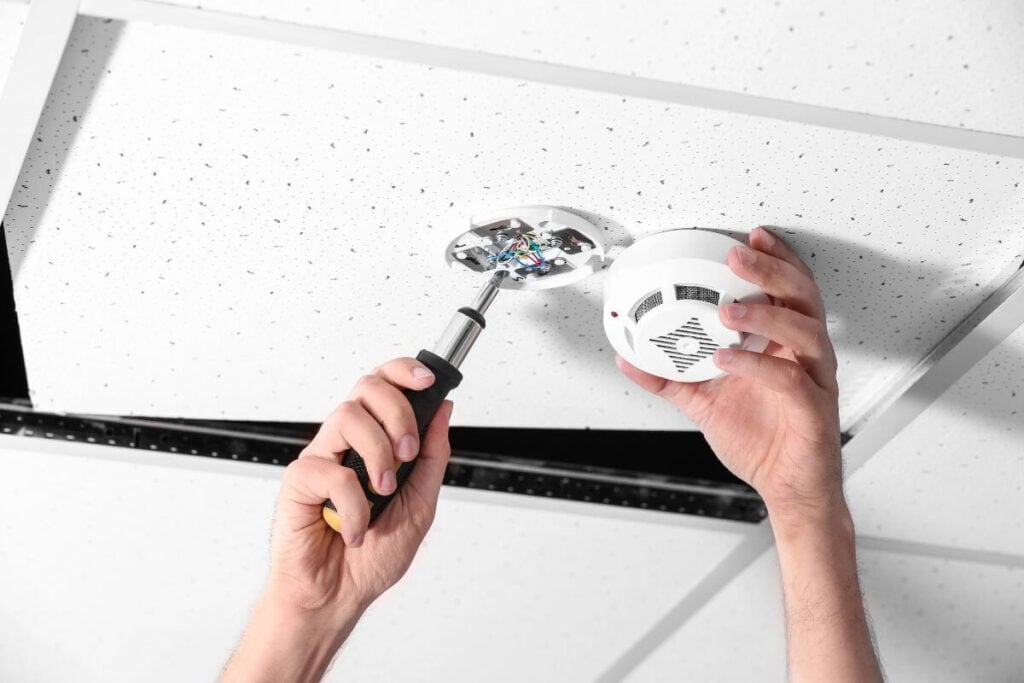
In short, if you have more than one alarm, all of them must be mains-powered smoke alarms, and they must be interconnected.
This means that if one alarm goes off, they all go off. This is for fire safety.
You must have a professional, licensed electrical contractor install these alarms.
Smoke alarm maintenance means regular testing and replacing ALL smoke alarms every 10 years.
So in a nutshell, you probably need more than one alarm (unless you live in a single room!) and these must be mains-powered smoke alarms that need to be interconnected.
Battery-operated alarms are only to be used in certain situations, and they must be lithium battery powered and last 10 years.
Not every household is the same, but we often see the same mistakes, including:
We understand that sometimes you simply cannot reach a smoke alarm or think that these regulations seem excessive, but keep in mind that 40 percent of all Perth house fires had no alarms or had non-working smoke alarms.
It is highly recommended that smoke alarms be tested and cleaned every month (or at the barest minimum, once a year).
No one will indeed know whether you tested or cleaned your smoke alarms, but nothing is more frightening than waking up and thinking you smell smoke, then wondering why the alarm didn’t sound!
Don’t let that happen to you, mate!
We will talk about easy solutions to these problems in a bit.
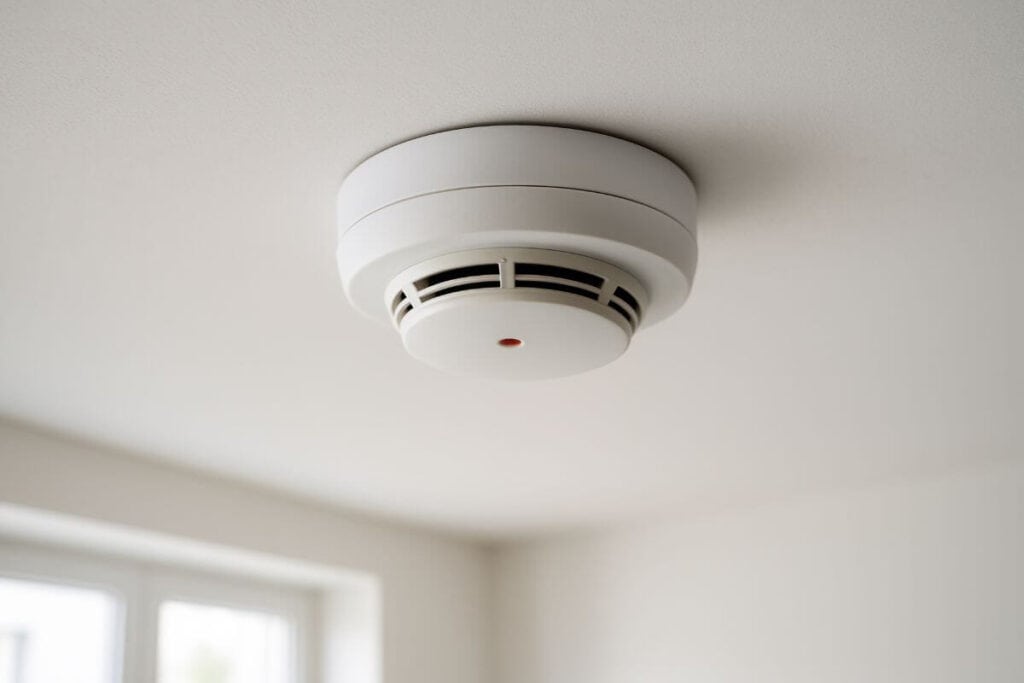
Compliant smoke alarm placement means at least one alarm on each floor of the house and one in front of each bedroom.
There is no requirement to place one in the kitchen, although many people do.
When alarms automatically activate due to everyday cooking, people become annoyed at frequent false alarms and often disconnect the devices.
This is why smoke alarm location matters. A properly placed alarm will end this annoying habit. You might want to consider adding heat alarms to your kitchen rather than ones that detect smoke.
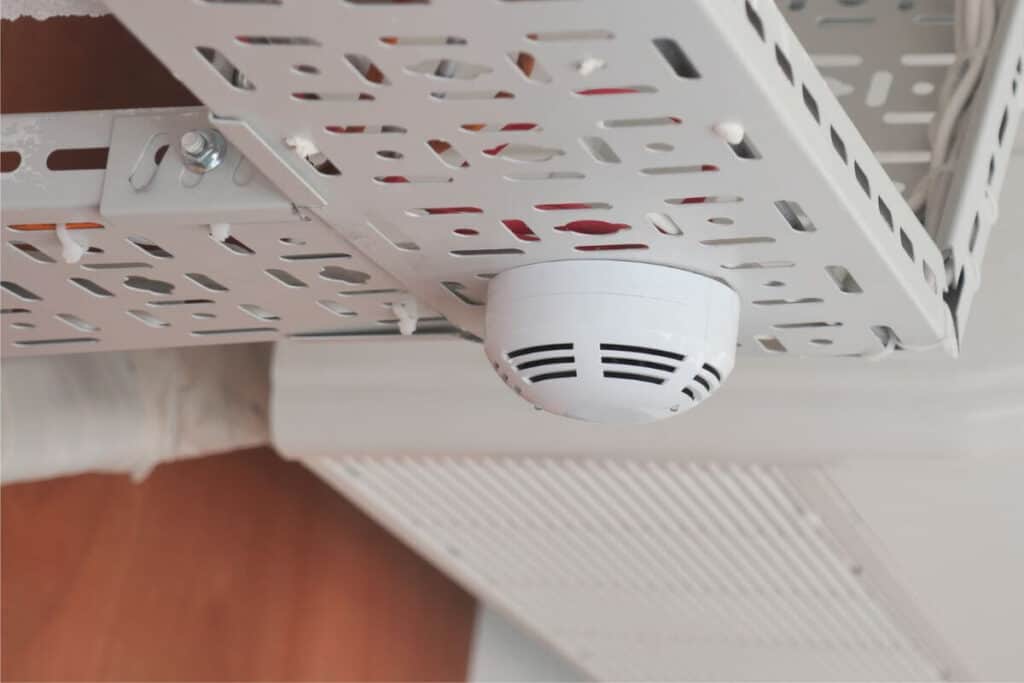
When installing smoke alarms, your installer must take special care to avoid dead air spaces where trapped hot air and smoke cannot reach the alarms. That’s more reason to trust only the pros!
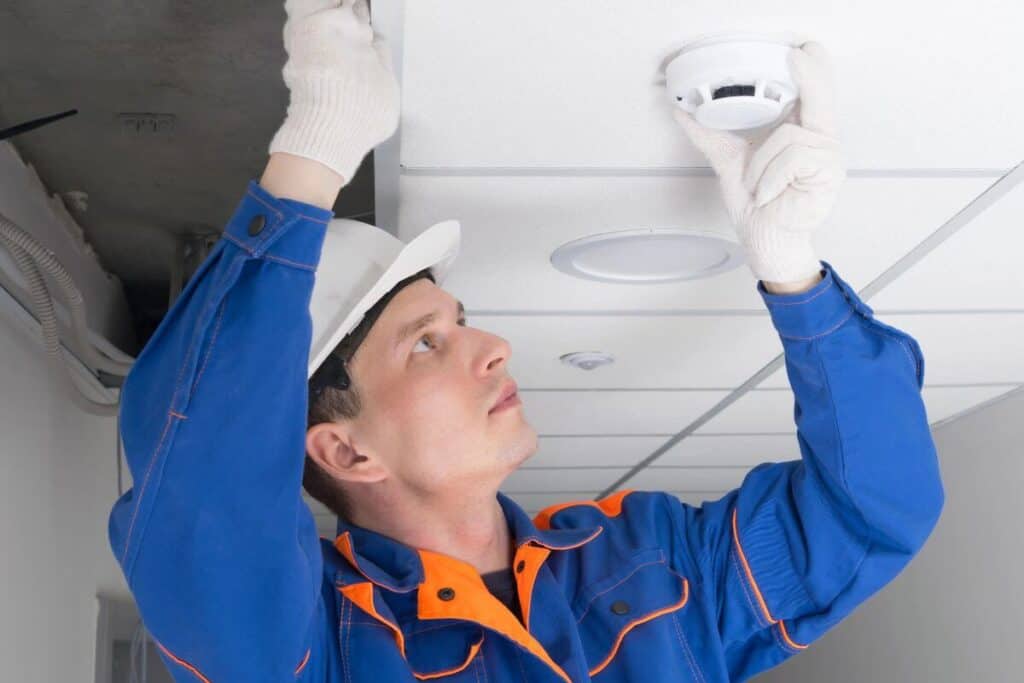
In short, a battery–powered smoke alarm is exactly what the name implies. It is powered by a battery.
In Western Australia, smoke alarms must be powered this way. Regular alarms that use regular “Duracell” type batteries are not permitted.
Hardwired alarms mean these are permanently connected to the house’s electrical wiring.
This way, they never run out of battery life and will still work, even during a fire!
Power outages are another story, which is why many people have at least one lithium battery-powered smoke detector as a backup.
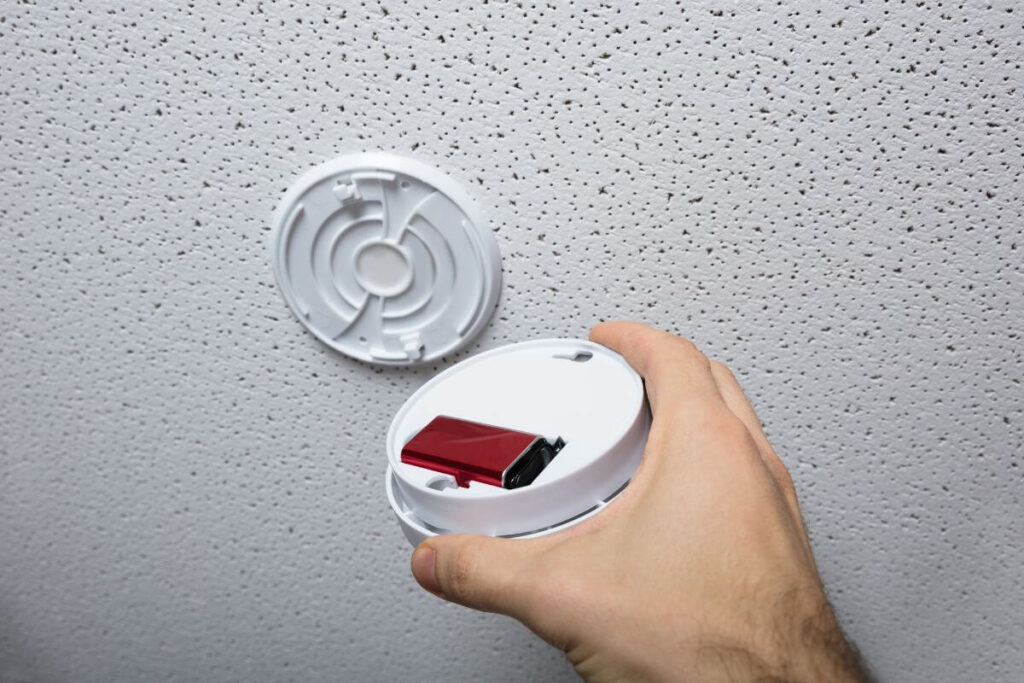
As a family-owned business in High Wycombe, we’ve replaced or installed hundreds (maybe thousands) of smoke alarms complying with Australian standards.
We know the laws inside and out. With more than a decade of experience, we can help you avoid expensive fines and keep your family safe.
Can’t reach your smoke alarm? Do you forget to test them?
No worries! Amp Electrical Perth is happy to provide smoke alarm maintenance. We can set up a schedule that works for you, test, clean, and maintain all the smoke alarms in your home so you don’t have to lift a finger!
One phone call is all it takes to set up your home safety and smoke alarm maintenance schedule.
We offer free quotes, no call-out fee, and are fully licensed and insured.
Amp Electrical Perth supplies and installs smoke alarms in compliance with WA regulations, servicing High Wycombe, Belmont, Beckenham, Ferndale, Maddington, and Ashfield.
As licensed electricians, we care about your home! We do all types of electrical work, including:
No job is too big or too small.
Call Amp Electrical Perth for all your electrical needs.

Imagine the peace of mind you will enjoy knowing your home’s smoke alarms comply with the law!
Don’t risk the lives of your family with nuisance alarms that get ignored after a while.
Call the professionals who know the law and can install new smoke alarms as required in your home!
We offer free estimates and never charge a call-out fee, so why not call today?
A: No, you don’t. You must have a smoke detector outside each bedroom and one on each floor of the home if it is a multi-level home. These mains-powered alarms must be interconnected and installed by a licensed electrician.
A: Since smoke alarm requirements state that these be installed by a licensed electrician, you can expect to pay about $150-$250 per alarm. This price would include smoke alarms deemed suitable for your building or flat.
A: In general, no. If you need to install a battery-operated alarm because there is no other option to power an alarm or you want a battery-operated alarm as a backup, you can install those yourself.
Remember that these alarms must have a lithium-powered battery that can last 10 years. There might be no “lithium battery smoke alarm police” to check on you, but in case of a fire, your homeowner’s insurance might not want to pay if the home did not have the required smoke alarms.